
Need help?Contact us
Suitable for ages 14+.
Performance dates
3 June - 4 July 2026
Run time: 2hr 40mins
Includes interval
‘dis is my home. My whole life. My history here. And de only future I go have is here.’
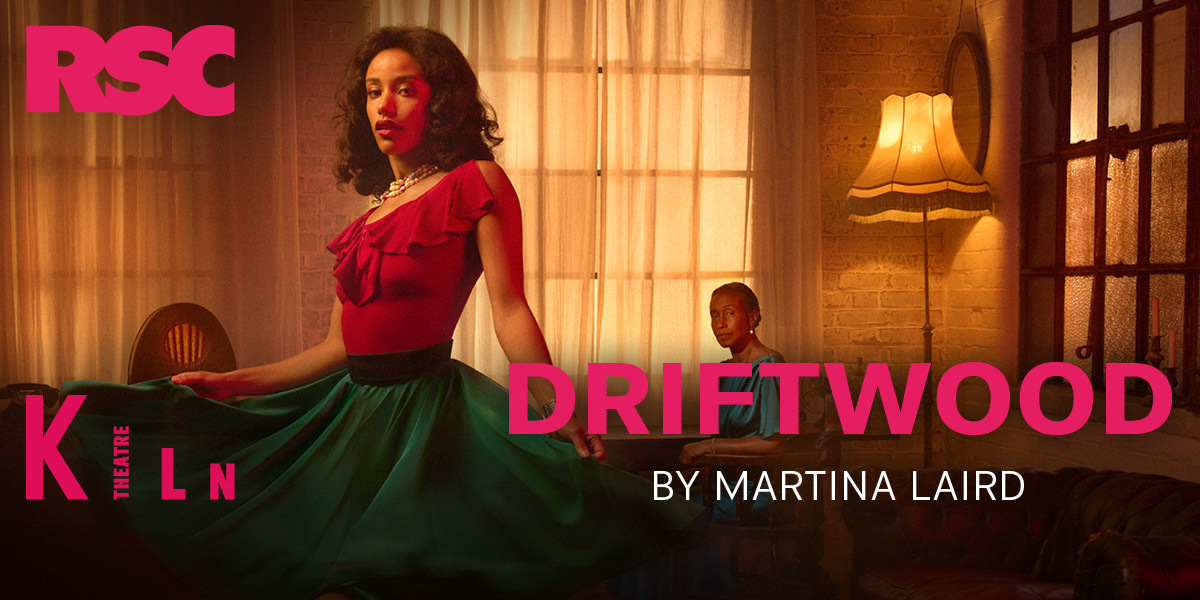
As colonial Trinidad advances towards political independence, a downtown Port of Spain gentlemen’s club becomes entangled in a different kind of custody battle.
ALMA promises its guests a comfortable environment to relax and indulge. Owned by Englishman Mansion, it’s governed by Pearl and coveted by beguiling Ruby.
Then Diamond drifts in. His impetuous deal with a corrupt US Marine imperils ALMA, and all their lives are collateral damage. One wrong move and everything could shatter.
Driftwood is the first play from Martina Laird. Directed by Chichester Festival Theatre’s Artistic Director Justin Audibert and set in 1950s Caribbean, it’s a deeply evocative story of self-determination and the search for family and belonging.

Martina Laird first began writing Driftwood, which arrives at the Kiln Theatre early next month, 20 years ago. A successful actor—for six years she played the much loved character Comfort Jones in Casualty and has worked at major theatres from the Donmar to Shakespeare’s Globe—Laird found herself haunted by the characters and story of Driftwood which is set in a gentleman’s club in Trinidad in 1956 when the island was on the brink of great change. Trinidad—where Laird was raised-- and Tobago became independent in 1962.
“I wrote it because the characters and setting were in my head, and they just kept talking to me, and I wanted to figure out what I was trying to say or what it was saying to me.” She says that it is set in 1956 because “it was a time when so many questions were in the air about what came next and so many artists were part of that debate about what the future should look like. It was a time of hope and optimism and self-definition.”
She did send the play out to a few theatres but was told by them, “We only do topical British subjects," as if the legacies of colonialism have absolutely nothing to do with contemporary British life. Perhaps they were disconcerted too by the way it puts the island’s vernacular to potent dramatic use. But that was two decades ago, and attitudes change not just to what stories are told but how they are told.
But rebuffed and for want of the dramaturgical help she felt she and the play needed, Laird abandoned it in a bottom drawer. She only got it out again just before the pandemic, organising a reading in her own home with Caribbean food and rum, and realised how much the play still talked to her but, more importantly, talked to other people.
It was still a slow burn to get it staged. She sought some dramaturgical support from Sebastian Born, and in 2024 he suggested she submit the play to the Verity Bargate Award run by Soho Theatre. It’s a reminder how plays overlooked by theatres often get an opportunity to rise via competition when they are read by several readers. Driftwood didn’t win, but it was the runner-up out of 1,700 entries. At the award ceremony someone from the RSC’s literary department asked Laird to send the play to them. Earlier this year the play opened at the RSC’s Other Place Theatre in Stratford upon Avon and now gets a London run.
27 May, 2026 | By Lyn Gardner